During the summer of 2020, the CMSA will be hosting a new Geometry Seminar. Talks will be scheduled on Mondays at 9:30pm or Tuesdays at 9:30am, depending on the location of the speaker. This seminar is organized by Tsung-Ju Lee, Yoosik Kim, and Du Pei. To learn how to attend this seminar, please contact Tsung-Ju Lee (tjlee@cmsa.fas.harvard.edu). Date Speaker Title/Abstract […]
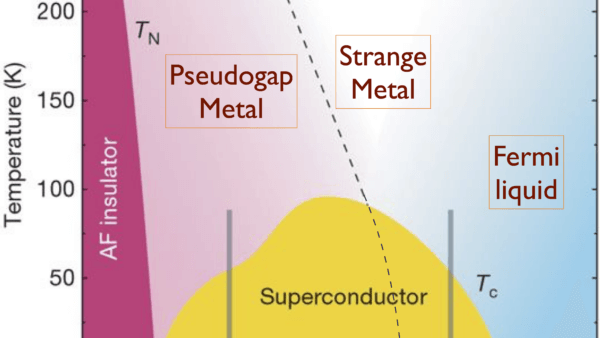
In the 2020-2021 academic year, the CMSA will be hosting a lecture series on Strongly Correlated Materials and High Tc Superconductor. All talks will take place from 10:30-12:00pm ET virtually on Zoom. Cuprate high-temperature superconductors are a classic quantum material system to demonstrate the beauty of “Emergence and Entanglement” in the quantum phases of matter. Merely by […]
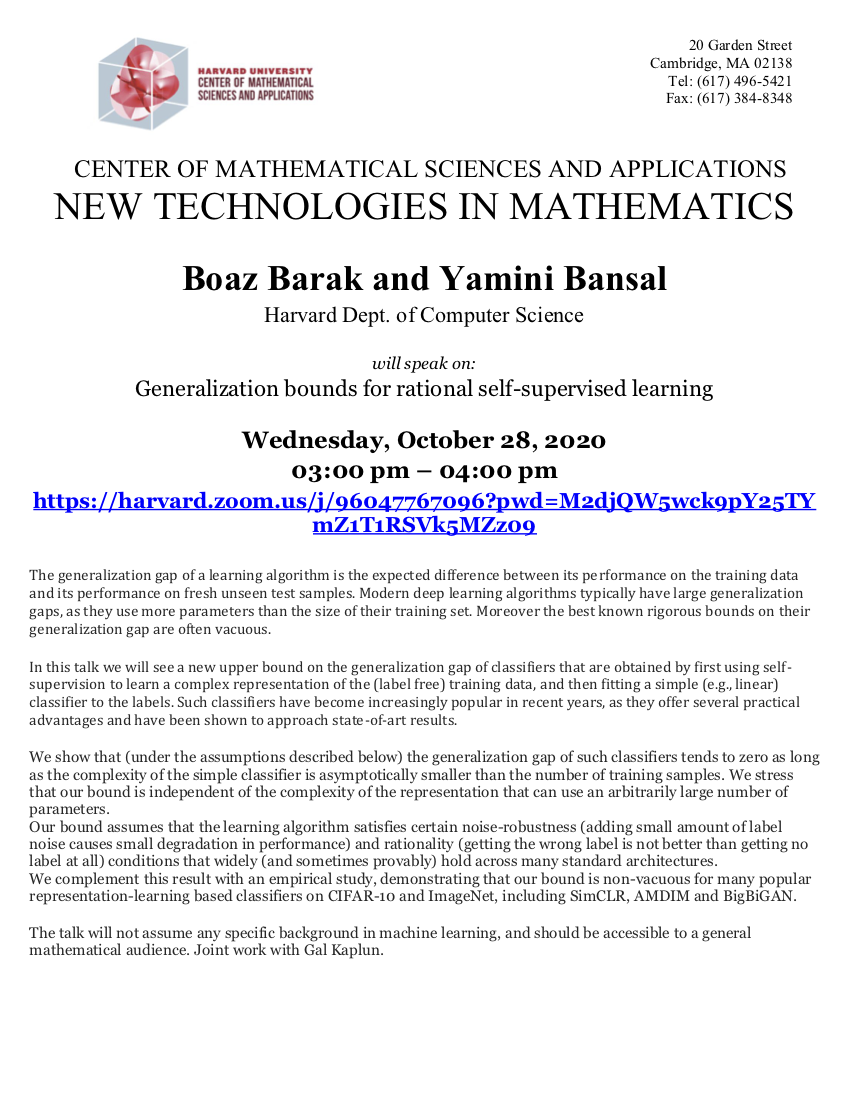
https://youtu.be/aVB1qFPeEmo Speakers: Boaz Barak and Yamini Bansal, Harvard University Dept. of Computer Science Title: Generalization bounds for rational self-supervised learning algorithms, or "Understanding generalizations requires rethinking deep learning" Abstract: The generalization gap of a learning algorithm is the expected difference between its performance on the training data and its performance on fresh unseen test samples. […]
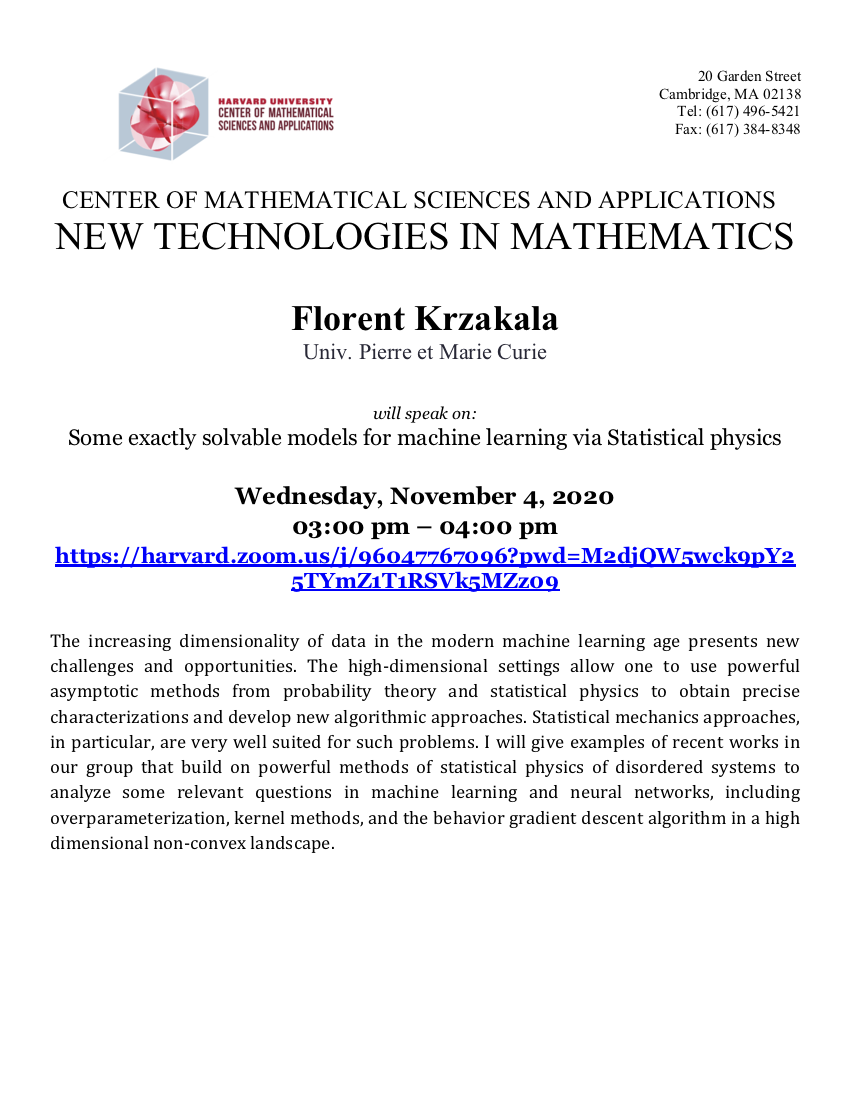
https://youtu.be/uUUeTYzMu0Q Speaker: Florent Krzakala, EPFL Title: Some exactly solvable models for machine learning via Statistical physics Abstract: The increasing dimensionality of data in the modern machine learning age presents new challenges and opportunities. The high dimensional settings allow one to use powerful asymptotic methods from probability theory and statistical physics to obtain precise characterizations and […]
https://youtu.be/t4xRwWxTzSg Speaker: Eric Mjolsness, Departments of Computer Science and Mathematics, UC Irvine Title: Towards AI for mathematical modeling of complex biological systems: Machine-learned model reduction, spatial graph dynamics, and symbolic mathematics Abstract: The complexity of biological systems (among others) makes demands on the complexity of the mathematical modeling enterprise that could be satisfied with mathematical […]
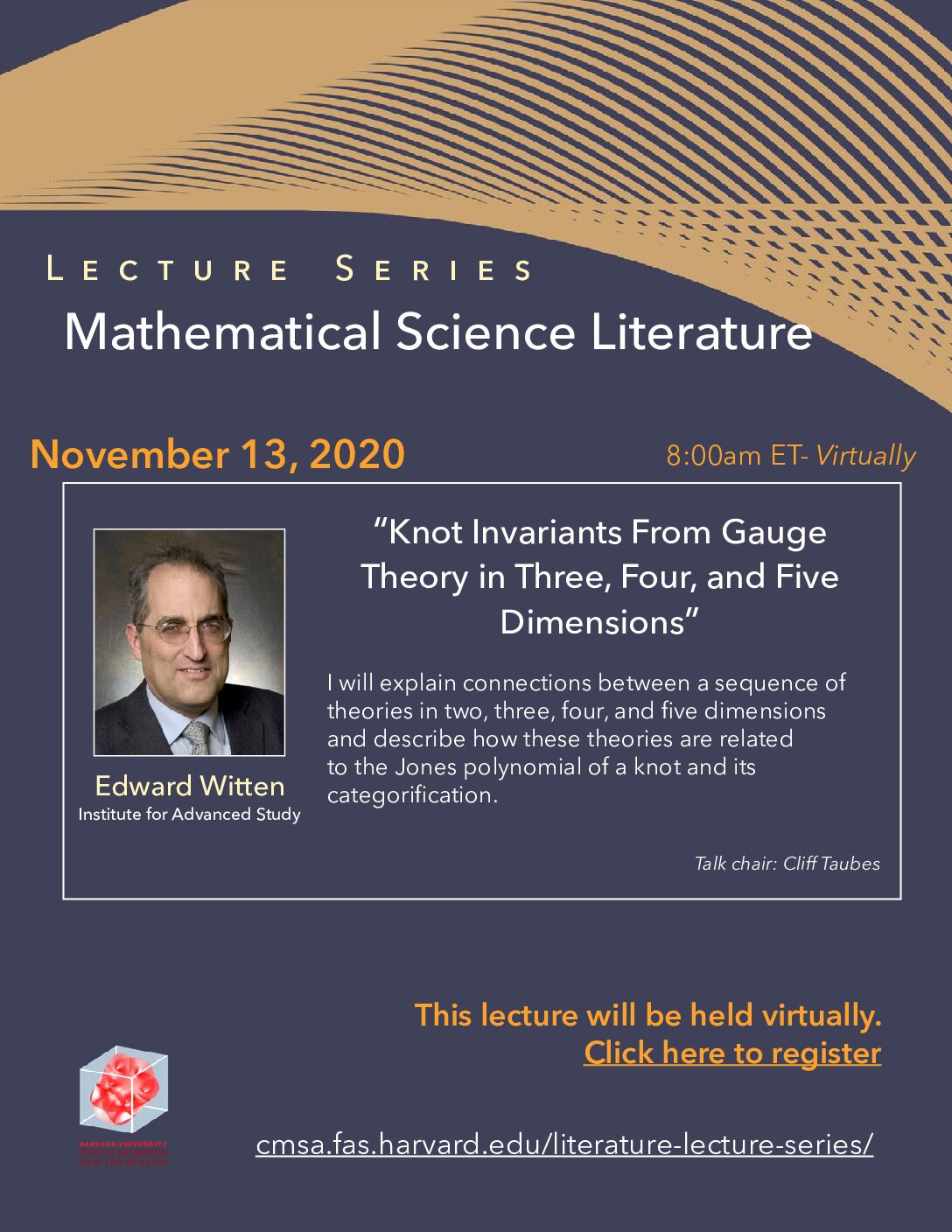
Edward Witten (IAS) Title: Knot Invariants From Gauge Theory in Three, Four, and Five Dimensions Abstract: I will explain connections between a sequence of theories in two, three, four, and five dimensions and describe how these theories are related to the Jones polynomial of a knot and its categorification. Talk chair: Cliff Taubes Video
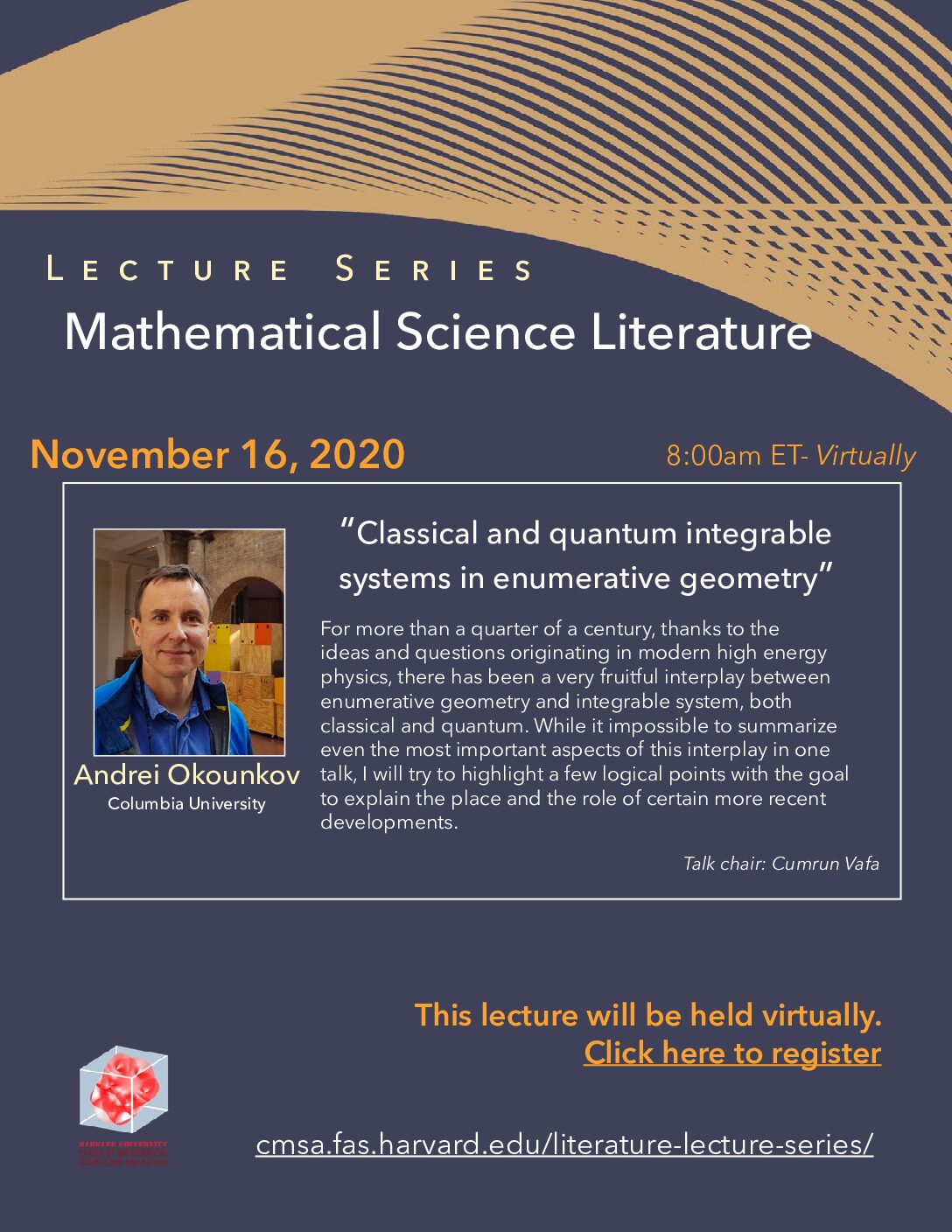
Andrei Okounkov (Columbia University) Title: Classical and quantum integrable systems in enumerative geometry Abstract: For more than a quarter of a century, thanks to the ideas and questions originating in modern high-energy physics, there has been a very fruitful interplay between enumerative geometry and integrable system, both classical and quantum. While it is impossible to summarize […]
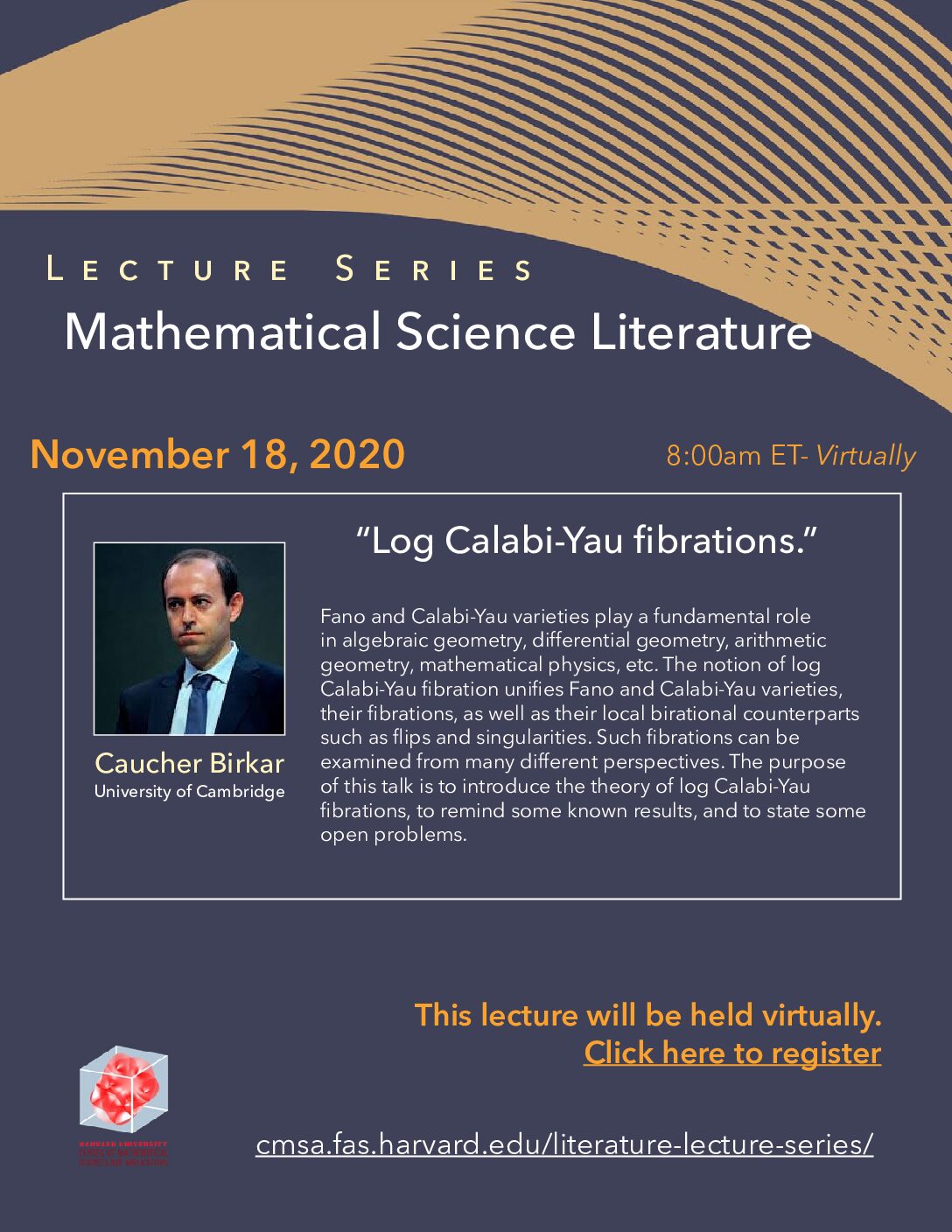
Caucher Birkar (University of Cambridge) Title: Log Calabi-Yau fibrations Abstract: Fano and Calabi-Yau varieties play a fundamental role in algebraic geometry, differential geometry, arithmetic geometry, mathematical physics, etc. The notion of log Calabi-Yau fibration unifies Fano and Calabi-Yau varieties, their fibrations, as well as their local birational counterparts such as flips and singularities. Such fibrations can […]
Speaker: Jose A. Scheinkman (Columbia) Title: Re-pricing avalanches Abstract: Monthly aggregate price changes exhibit chronic fluctuations but the aggregate shocks that drive these fluctuations are often elusive. Macroeconomic models often add stochastic macro-level shocks such as technology shocks or monetary policy shocks to produce these aggregate fluctuations. In this paper, we show that a state-dependent pricing model with a large but […]
The CMSA Members’ Seminar will occur every Friday at 9:30am ET on Zoom. All CMSA postdocs/members are required to attend the weekly CMSA Members’ Seminars, as well as the weekly CMSA Colloquium series. Please email the seminar organizers to obtain a link. This year’s seminar is organized by Tianqi Wu. The Schedule will be updated below. […]
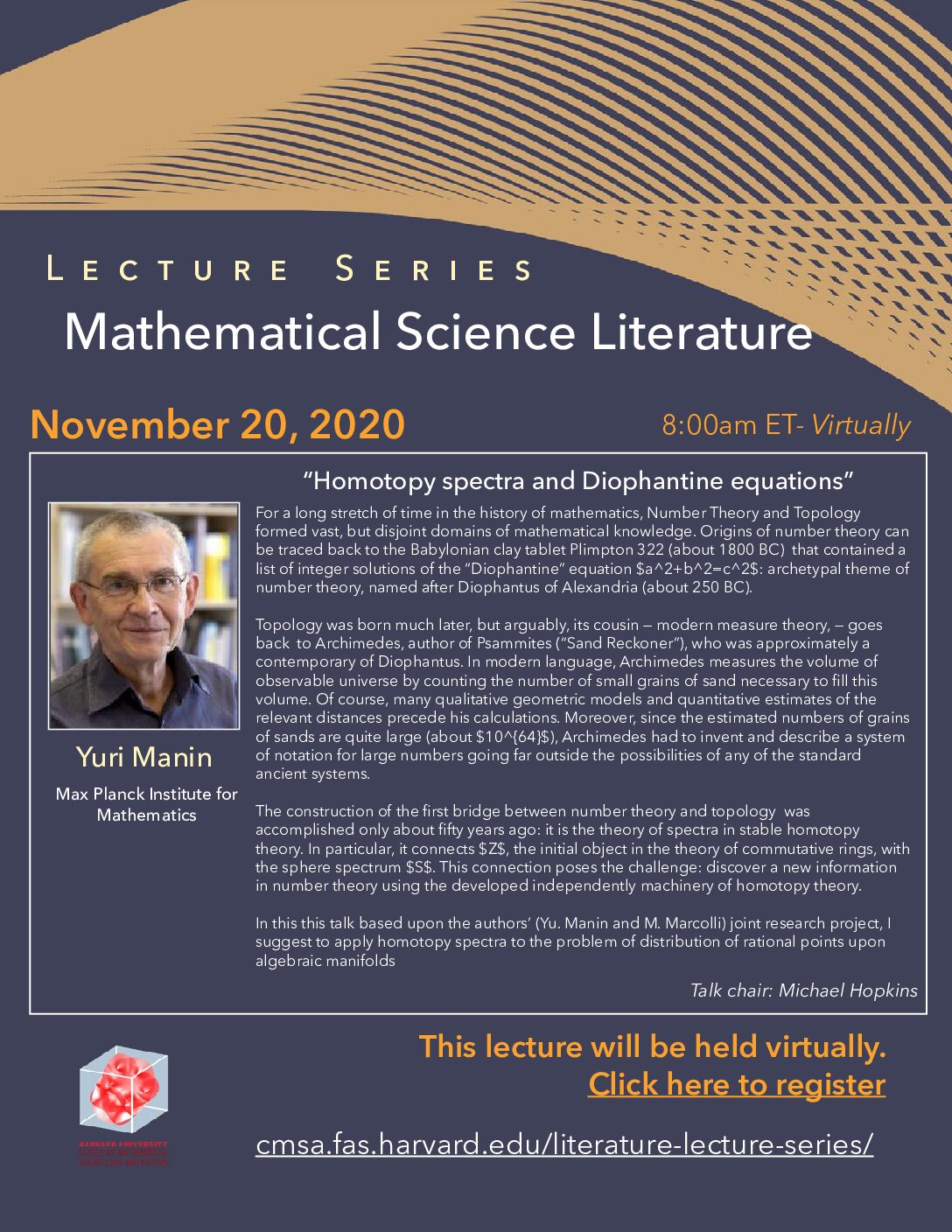
Yuri Manin (Max Planck Institute for Mathematics) Title: Homotopy spectra and Diophantine equations Abstract: For a long stretch of time in the history of mathematics, Number Theory and Topology formed vast, but disjoint domains of mathematical knowledge. Origins of number theory can be traced back to the Babylonian clay tablet Plimpton 322 (about 1800 BC) that […]
Alain Connes (Collège de France) Title: Noncommutative Geometry, the Spectral Aspect Abstract: This talk will be a survey of the spectral side of noncommutative geometry, presenting the new paradigm of spectral triples and showing its relevance for the fine structure of space-time, its large scale structure and also in number theory in connection with the zeros […]
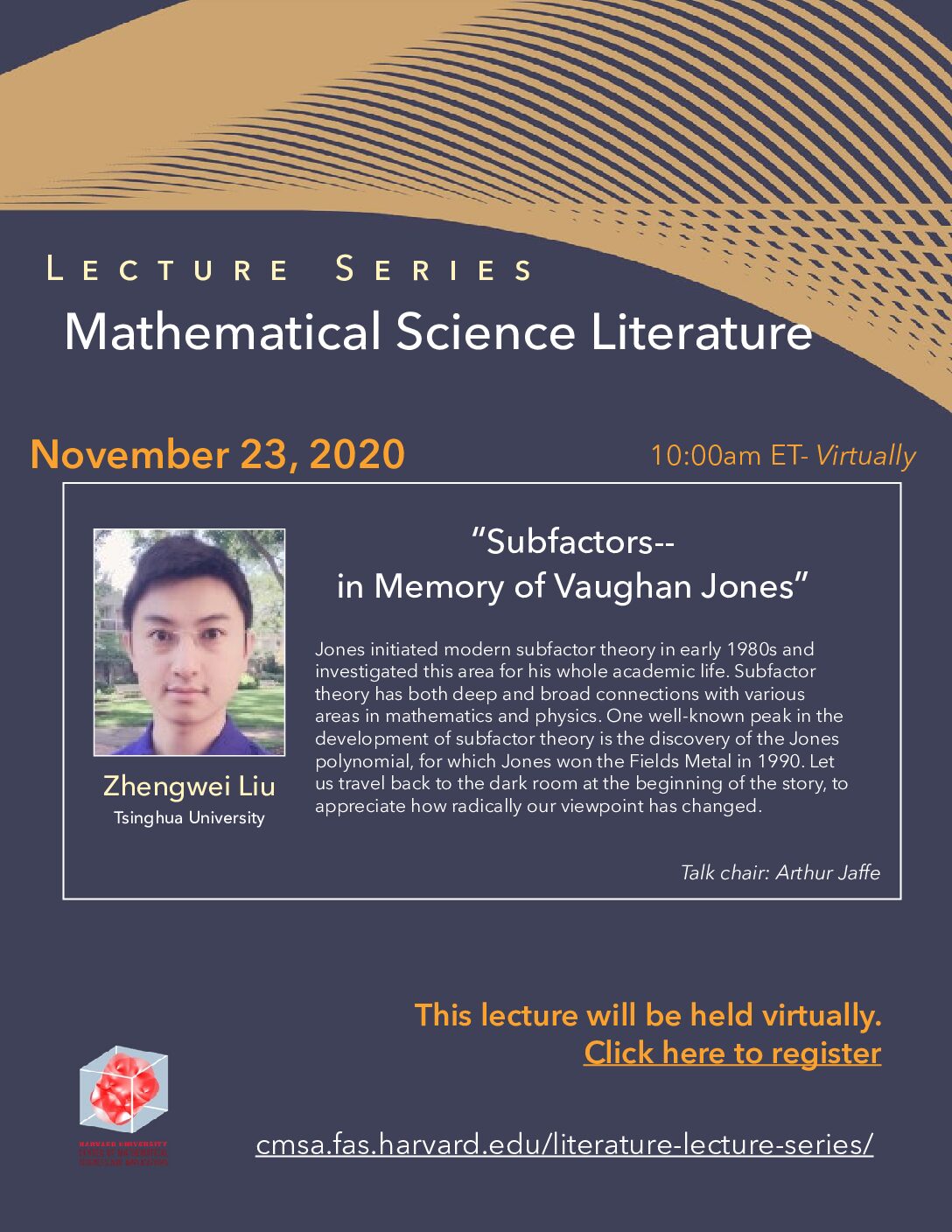
Zhengwei Liu (Tsinghua University) Title: Subfactors–in Memory of Vaughan Jones Abstract: Jones initiated modern subfactor theory in the early 1980s and investigated this area for his whole academic life. Subfactor theory has both deep and broad connections with various areas in mathematics and physics. One well-known peak in the development of subfactor theory is the discovery […]
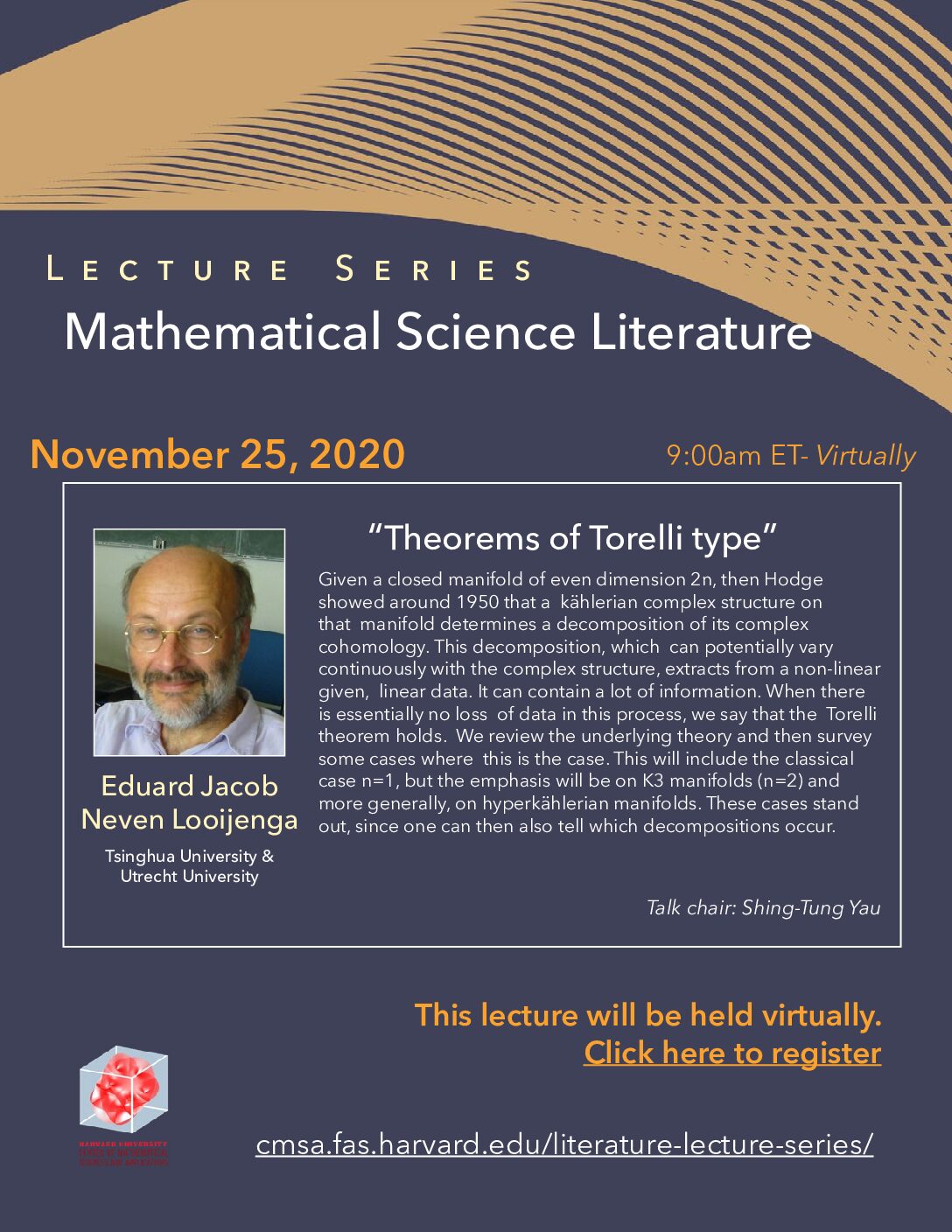
Eduard Jacob Neven Looijenga (Tsinghua University & Utrecht University) Title: Theorems of Torelli type Abstract: Given a closed manifold of even dimension 2n, then Hodge showed around 1950 that a kählerian complex structure on that manifold determines a decomposition of its complex cohomology. This decomposition, which can potentially vary continuously with the complex structure, extracts from a […]
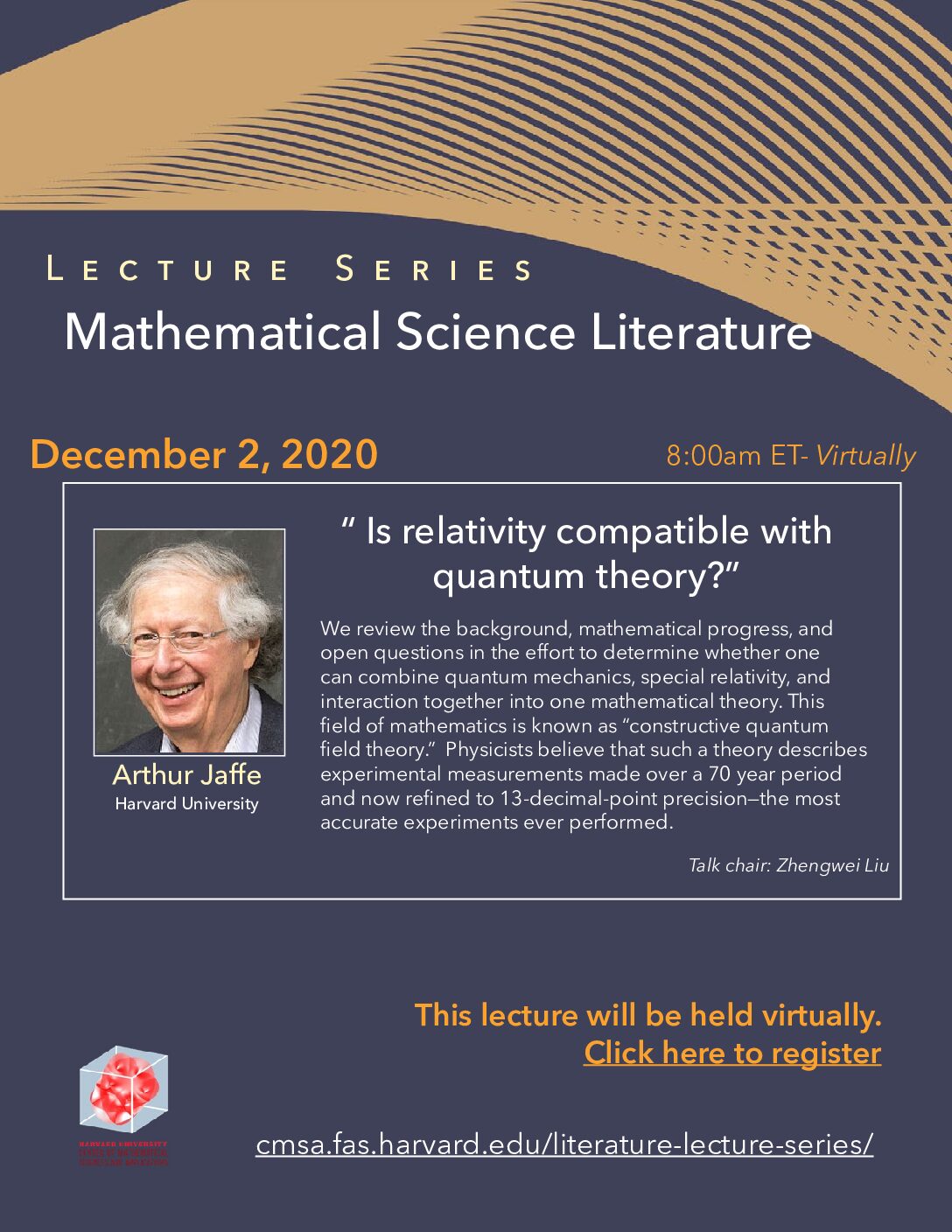
Arthur Jaffe (Harvard University) Title: Is relativity compatible with quantum theory? Abstract: We review the background, mathematical progress, and open questions in the effort to determine whether one can combine quantum mechanics, special relativity, and interaction together into one mathematical theory. This field of mathematics is known as “constructive quantum field theory.” Physicists believe that such […]
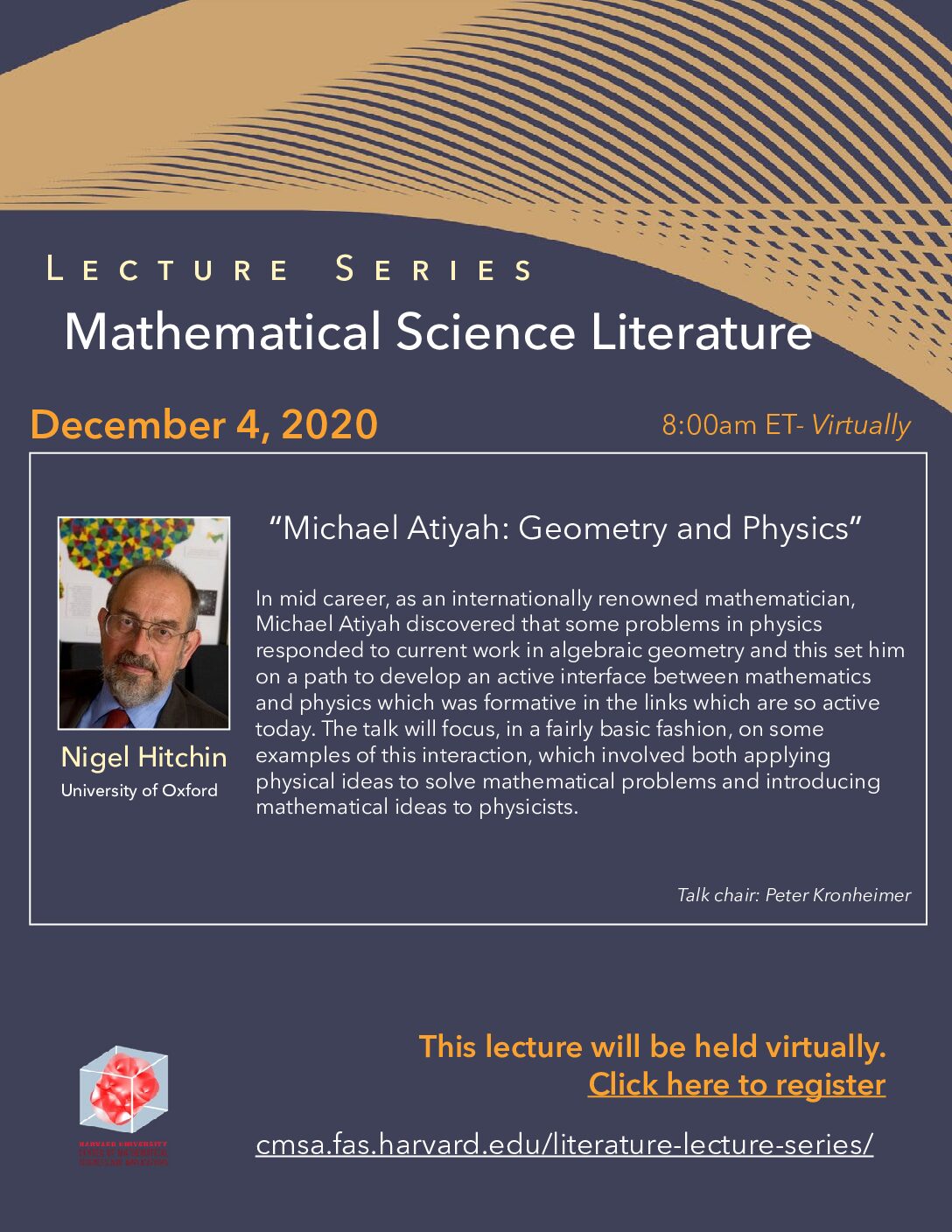
Nigel Hitchin (University of Oxford) Title: Michael Atiyah: Geometry and Physics Abstract: In mid-career, as an internationally renowned mathematician, Michael Atiyah discovered that some problems in physics responded to current work in algebraic geometry and this set him on a path to develop an active interface between mathematics and physics which was formative in the links […]
New Technologies in Mathematics Seminar Event Title: Generalization bounds for rational self-supervised learning algorithms, or “Understanding generalizations requires rethinking deep learning”
New Technologies in Mathematics Seminar Event Title: Towards AI for mathematical modeling of complex biological systems: Machine-learned model reduction, spatial graph dynamics, and symbolic mathematics